A Founders Thoughts
Thoughts on Richard Wrangham’s book, Catching Fire, the backyard barbecue, and the old pull of standing near fire.
There is a funny thing that happens when a grill gets lit in the backyard.
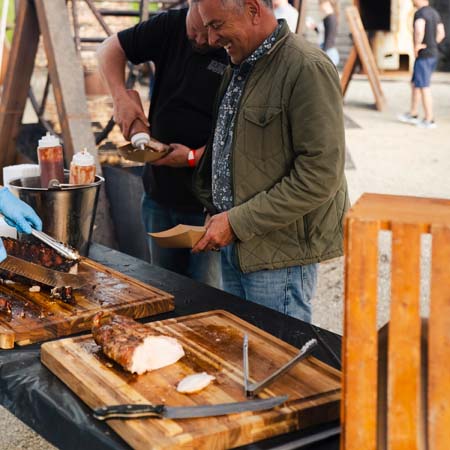
A man who may have walked past a full dishwasher six times without registering it, will suddenly become highly alert. He will step outside, make a serious face, and begin speaking about airflow, coal beds, meat temperature, carryover heat, wood choice, and why “everybody needs to leave it alone for a minute.”
Sometimes he knows what he is talking about.
Sometimes he is mostly clicking the tongs and hoping confidence will create competence.
Either way, something has awakened.
I say that with some sympathy, because I have been that guy. I have stood near a fire longer than was probably necessary. I have moved wood that should have been left alone, checked meat that did not need checking, and called it “managing the heat” when really I was just grateful to be outside with a legitimate reason not to do anything else.
That is probably where this whole thing starts. Not with the modern backyard grill exactly, and definitely not with the loud shirt or fancy apron that says something about Dad and meat. Long before propane tanks, pellet hoppers, stainless grills, phone apps, and all the Father’s Day marketing ads, there was fire. And before cooking was leisure, it was survival. That’s the part matters.
Where Wrangham Changed the Conversation
Evolutionary anthropologist Richard Wrangham’s book Catching Fire gave language to something I think many of us feel before we can explain it. His argument, in plain terms, is that cooking did not just improve food. It helped make us human.
Fire made food softer, safer, and more valuable to the body. It helped unlock calories from roots, tubers, meat, and fat. It reduced the time and energy needed to chew and digest. Wrangham makes the point that great apes can spend up to eight or 10 hours a day chewing; humans, by comparison, are almost suspiciously efficient eaters. Maybe unknowingly, cooking changed the math of our days back then.
That may be the most overlooked gift of fire. Not flavor or romance, but time and bio-available nutrients.
Cooked food gave early humans a more usable day. It allowed people to eat after dark. It made the campfire more than a heat source. It became the center point – warmth, light, food, safety, schedule, argument, gossip. The fire was not a decoration. It was what created a living, functioning human household.
A smoky, problematic at times, yes. A deceptively demanding user interface if the wood was wet. But it worked.
And once fire changed food, the food changed us. Wrangham gets into the uncomfortable and interesting part of this: cooking helped create the conditions for a deeper division of labor. Men could spend more of the day hunting because they were no longer trapped in the neverending push for huge amount raw-food that would otherwise be necessary, that time freed-up from chewing and foraging like the large apes trying to make sure the day was spent consuming enough. Heat and flame cooking freed time, and time made stretching for more activities and more risk possible.
That does not mean ancient men were heroic barbecue kings striding into camp every evening with a perfect tomahawk ribeye. That was much later. The ancient hunter probably came home empty-handed often enough to keep him humble, assuming humility had been invented. There was no Instagram caption for “walked all day, saw nothing, ate roots.”
But when hunting worked, it mattered. Meat, fat, honey, and other prized foods came in sporadically and when it did likely change the mood of the group. Such success turned a normal night hunger into a better one. And that is one piece of why men became attached to the drama around food and fire. It involved risk, tools, timing, animals, fuel, smoke, and the public moment when something came off the heat and everybody was there waiting. That’s the part that is still here with us.
What Men Historically Cooked
Across many societies, everyday household cooking became women’s work, relentlessly so. It was repetitive labor: staples, children, water, fuel, dishes, hunger, tomorrow, repeat. Wrangham is clear that this pattern was not some harmless little arrangement, rather it carried a lot of weight, value and thus encouraged partnerships.
Men did cook, but often in different settings. When the big kill came back to base, hunting camps etc.. They cooked when no one else was there to do it. They cooked in bachelor groups, on journeys, at feasts, in rituals, around large animals, and in community settings where the work involved scale, danger, ceremony, or an audience.
Men were often less attached to daily cooking than to event cooking. Likely not breakfast, or similar endless maintenance of the household. More like, there is an animal, a fire, and not only does the work need to get done, if this goes badly everyone will know.
Which, when you think about it, is basically a modern barbecue contest without matching team shirts.
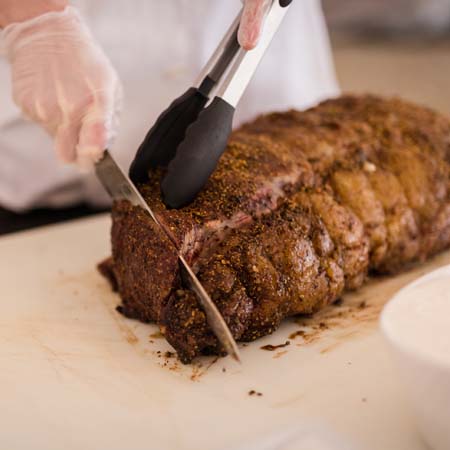
The old pattern survives in funny ways. A man might not know where the measuring cups live, but he will have firm opinions about brisket bark. He might not clean the stovetop without prompting him, but hand him a rack of ribs and suddenly he is all over it. He has a probe thermometer, a favorite knife, three kinds of salt, and maybe apologetic rambling about why gas is convenient but not the same thing.
Is that DNA? Likely something like that, at least the baked in sense that smoke and fire could mean food. I do think there is old wiring involved for sure. Fire gives men a form of novel usefulness that modern life, in all its routine often hides from them. It is physical. It is visible. It uses tools. It has danger but manageable. It produces food. It gathers people without anyone having to spell it out. The steaks are on and everyone gets it and starts orbiting the grill.
Why Men Stopped
Part of the answer is that cooking moved indoors and became domestic routine. Once the everyday meal became household labor, it landed heavily onto the manager of the home, women. Men kept the public, festive, dangerous, or occasional versions. Women carried the repetition.
The other answer is that fire itself slowly disappeared from the center of our lives.
Heat got tamed. Fuel source changed and, in a way, hidden. The fire became the wood fired stove. Then the stove became a switch. The switch became the microwave. The microwave became the delivery app.
We made life easier and then wondered why it felt thinner and more hurried.
I am not against convenience. Nobody needs to romanticize smoke in the eyes, wet wood, or pretending a bad fire is a spiritual lesson. Some bad fires are just bad fires. But when flame left daily life, something else vanished with it: attention. Heat no longer had to be read. Food no longer had to be watched in the same way. The cook became more of an operator. Push the button. Set the timer. Trust the machine.
There are times for that. But it is not the same thing.
Why the Grill Still Pulls
The backyard grill remains powerful because it is one of the last doorways modern people have back into the ancient experience. Even softened by propane or made nearly automatic by pellets, it still carries a trace of the original thing: food outside, heat in front of you, smoke moving through air, people drifting toward the smell, someone standing there like he has been assigned a post.
A real fire asks for presence. You can have a plan, but the fire gets a vote. Wind shifts. Fat drips. Wood catches faster than expected. Coals cool down. Smoke changes from bitter, then workable. The meat tightens, relaxes, stalls, pushes back. You adjust. Then you adjust again. For many that is not inconvenience, it is the whole point of the endeavor.
Fire makes time visible. You can see impatience. You can smell it. You can taste it when someone traps dirty smoke around good meat, or sauces over the evidence, or keeps flipping food because standing still made just wasn’t an option.
I learned it the hard way, which may be the only real way. Burned food. Sooty food. Fires that looked ready and were not. Fires that had flames but no coal bed, all the drama but no maturity. That is a problem with cooking and in our now inpatient nature.
Eventually you learn that the best cooking fire is not always the loud one. The real work often starts after the flame calms down and the wood quits burning the hair on your knuckles.
That Is the Discovery Fire zone.
Discovery Fire reaches back earlier than modern American barbecue. I love honest barbecue, but what we are after is older than that category: meat near flame, food over embers, wood that has to be carefully selected, ingredients that do not need to be buried under sugar, and heat that supports the food instead through attentiveness and patience.
For us, fire is not a feature. It is our platform. We are not trying to replicate the look of fire. We cook with it. Live hardwood flame and ember have a way of telling the truth. They reward patience, expose shortcuts, and make flavor feel earned.
That is why this is not really about men reclaiming a throne beside the grill. More like giving a chance to recover the old work around food and cooking. Build the fire. Read the heat. Feed the people. Stay with it.
Maybe that is the old pull men still feel when they step outside toward smoke and flame. Not superiority. Not ownership. Recognition. A sense that something ancient that feels natural and is still asking for attention, and that paying attention might be good for us.
Men started cooking because the world demanded it. They mostly stopped because the work moved inside, the labor got divided for better or worse, and modern life made it easy to outsource the fire.
But the fire waits. It does not care about your title, your gender, your apron, or how confidently you clicked the tongs. It even care if your there…but you do. So show up. And maybe do the dishes after, just to prove civilization was not so random.