Explore the Story
Things in Life Tend to Find You
There are some things in life you choose, and then there are things that seem to choose you long before you understand why. This is one of those stories.
The Boy Who Wouldn’t Help Set Up Camp
It begins with a boy who didn’t quite know where he fit. The youngest in a large family, Chris Varela, now 64, grew up in the late sixties and seventies somewhere between included and overlooked. His early life was split between Southern California and long, wandering summers on the road—endless miles pulling an Airstream across the spine of the West, from Mexico to Canada and countless remote places in between where pavement gave way to something quieter and more elemental.
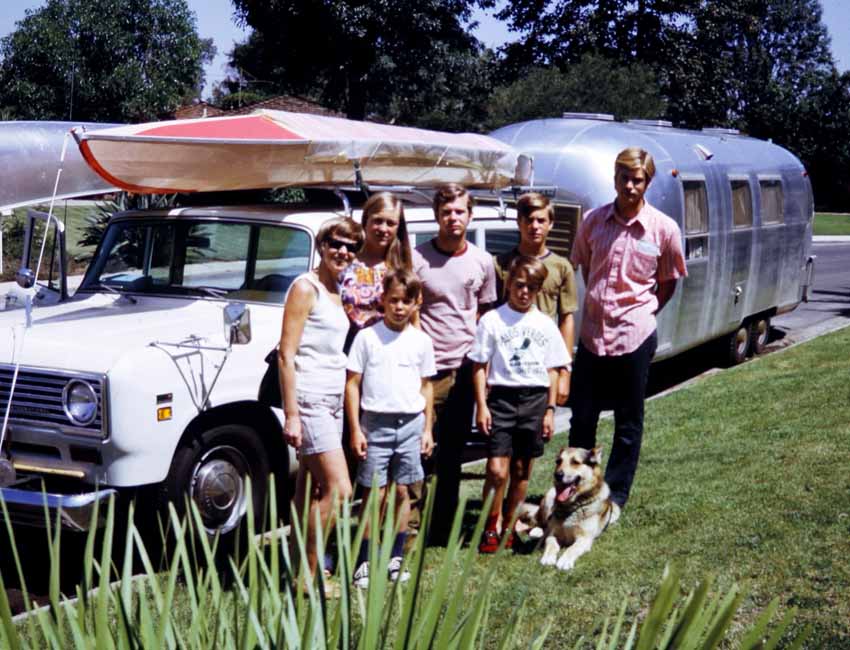
At each stop, before anything was unpacked or settled, he would run—not to explore, not to play, but to build a fire… or disappear toward whatever water was nearby to fish. It drove his father crazy, trying to wrangle six kids in different stages of rebellion while managing gear, logistics, and the constant motion of the road. But Chris wasn’t paying attention to any of that. He was focused on the fire or fishing.
He gathered sticks, sorted them, and arranged them with a kind of intensity that didn’t match his age. And if anyone interfered—if they tried to rush the process or place wood out of order—he would push back with urgency, insisting, “little sticks… little sticks.” At ten years old, he was determined to manage a fire no one needed and no one wanted at that stage of setting up camp.
At the time, it looked like stubbornness, maybe even defiance. To others, it was easy to dismiss him as that “little pyro.” But maybe it was something else entirely—something he didn’t yet understand, but couldn’t ignore.
Turns Out It’s DNA
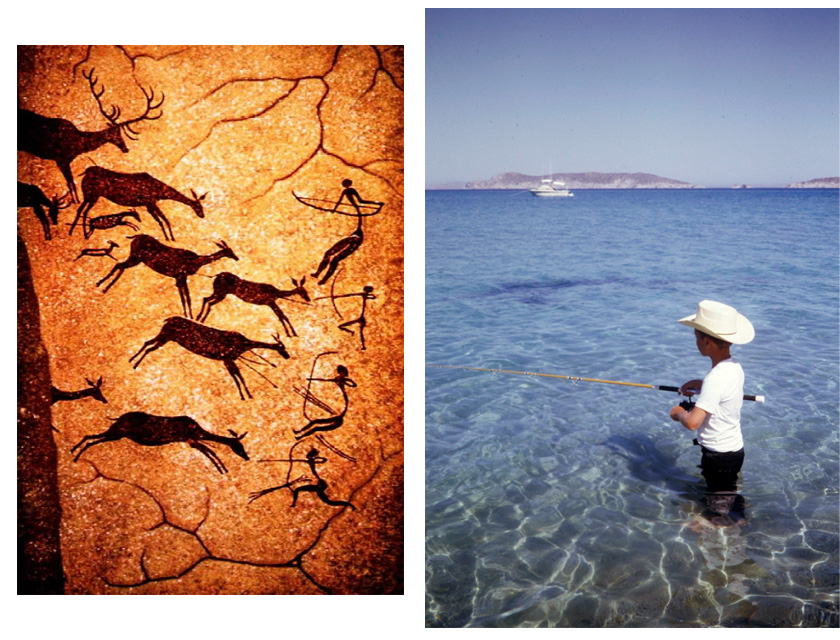 Decades later, reading Catching Fire by Harvard anthropologist Richard Wrangham, that early instinct finally found its explanation. The idea was simple, but it landed with force: fire is not just a tool, it is the foundation of human existence.
It is what extended our day beyond sunset, transformed raw food into nourishment, and created the first place where humans truly gathered. Around fire, we didn’t just cook—we connected, we told stories, we formed culture. In a very real sense, fire is embedded in us. It is part of our DNA. And suddenly, that boy standing over a pile of sticks made sense.
A Career That Evolved Quickly (But Wasn’t Quite Everything)
Life, of course, moved on. A career in construction management—on a large scale—took hold, bringing with it pressure, responsibility, and the constant weight of execution. From the outside, it looked like success. But internally, something was missing. And then, almost unintentionally, cooking—specifically cooking over fire—re-entered his life. At first, it was simply a needed distraction from the professional pressure. Something physical. Something immersive. A way to step out of the mental grind and into something real. It was a great new learning experience. And then it took hold. What began as a distraction reemerged as something deeper—a new-old passion that had never really gone away.
Learning What Fire Actually Does the Hard Way (Which Is the Only Way)
The early attempts were rough. Burned food, uncontrolled heat, smoke going everywhere, and no real understanding of timing or fire stages. But failure didn’t push him away; it pulled him in. Cooking over fire became less about food and more about understanding how fire behaves. You begin to see that flame is not the same as ember, that heat is not just temperature but timing, that different foods respond differently depending on fat, density, and exposure. And eventually, you realize something most people never do: you don’t control fire—you work with it. It demands presence. You cannot rush it, automate it, or walk away from it. You are either there, engaged in the process, or you fail.
It Became Part of Family Life
This wasn’t learned in isolation. His children grew up inside it, standing around open flame, turning meat, watching coals, learning not through instruction but through participation. These weren’t lessons in technique; they were experiences that stayed.
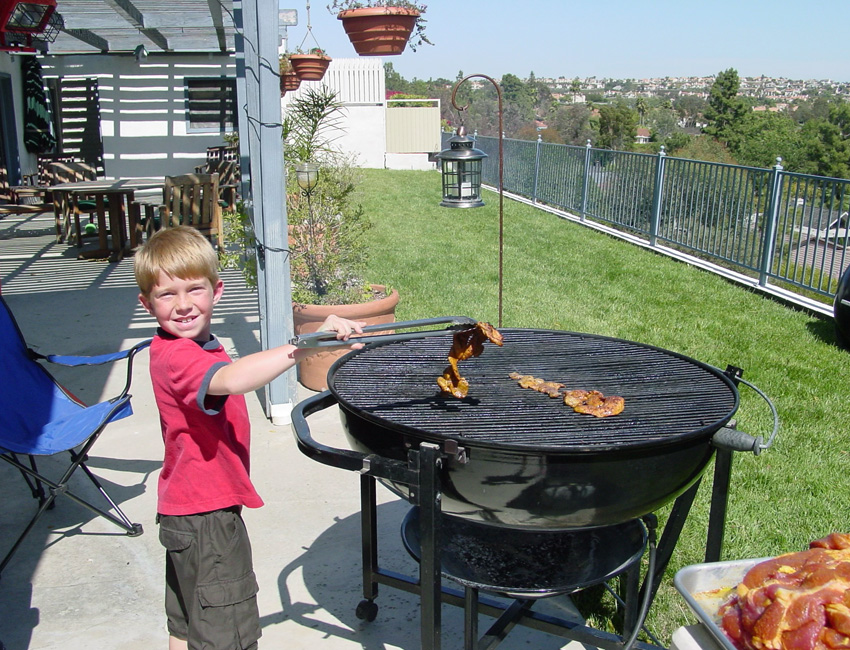
They Didn’t Just Grow Up Around It
What started as standing around the fire didn’t stay there. At some point, it shifted.
It stopped being something the kids watched and became something they were inside of—physically, mechanically, fully engaged in a way that didn’t look anything like traditional chores or helping out around the house.
Gabriel, Rachel, and Jacob didn’t just grow up on the property. They didn’t just help build it. They were what made it possible. Without them, it wouldn’t have carried the same meaning—and it likely wouldn’t have been realized at all.
Not in the abstract sense, but in the actual work of it. Welding, grinding, lifting, fabricating. Running equipment that most people wouldn’t expect kids to even be near, let alone operate. Sparks flying, steel moving, things coming together piece by piece—not as a project assigned to them, but as something they were part of shaping.
Not occasionally, but consistently. Over years, not moments. Through cold winters where nothing wants to move, muddy springs that slow everything down, water-filled trenches, and those late fall days where everything is wet, heavy, and just a little miserable. Working in the dark more often than not, under temporary lights that never quite hit where you need them. Finishing things because they had to be finished, not because it was a good time to stop. Summer days stretching long enough that dinner didn’t happen until ten at night—eaten tired, usually still in work clothes, hands dirty, boots wet.
It wasn’t clean work, and it wasn’t comfortable. It was just what had to be done.
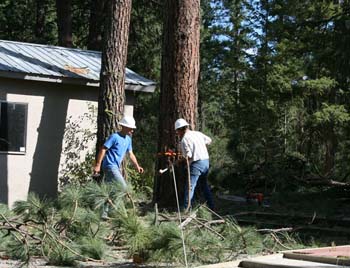
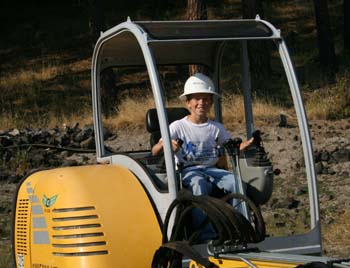
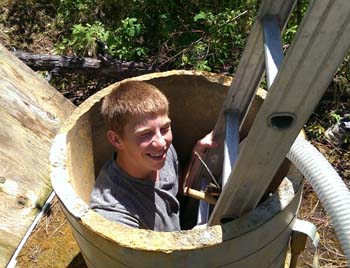
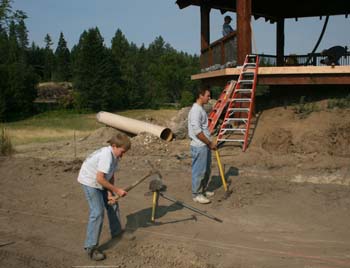
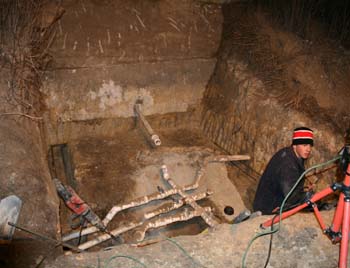
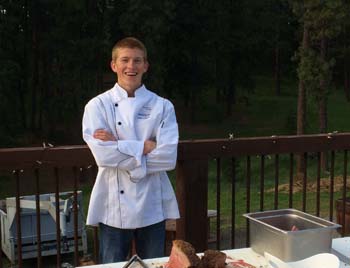
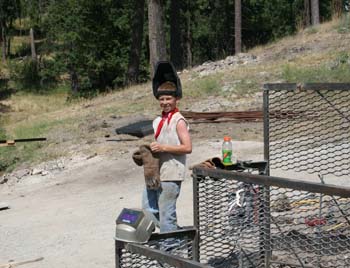
They laugh about it now—maybe a little uncomfortably, and with likely a certain amount of relief that they’re past that stage…they survived it.
But there’s an understanding underneath it too. That those years, as hard as they were in the moment, made everything else possible—and, whether they say it outright or not, there’s a quiet pride in having come through it.
At times it felt less like a project and more like a work camp—legal, of course… mostly. The same went for the land itself. This wasn’t a finished place they stepped into. It was an old farm that needed everything—repair, rebuilding, clearing, rethinking. And they were there for that too. Not occasionally, but as part of the rhythm of what had to be done. Over time, the work stopped feeling separate from life and just became part of it.
Fifteen years of showing up the seemingly never ending demanding priorities. Working through what needed to be done, learning by doing, seeing how things come together on the fly…new needs created through a vision that evolved the moment a prior part got done…and revealed the next…and the next.And over time, that does something. It changes how you see effort. It changes how you understand process. It creates a kind of ownership that doesn’t come from being told something is yours, but from knowing you had a hand in making it what it is, and pushing through.
You first see them—those didn’t come from a catalog. They came out of that process. Out of time spent cutting, welding, grinding, sanding, lifting, assembling, adjusting. Out of a family working together in a way that didn’t separate generations into roles, but pulled everyone into the same sometimes overwhelming ideal. So when people walk through this place and feel that something about it is different, it’s not just the scale or the fire or the layout.
It’s the fact that what they’re looking at wasn’t just built. It was lived into being.
The Farm Called us Back
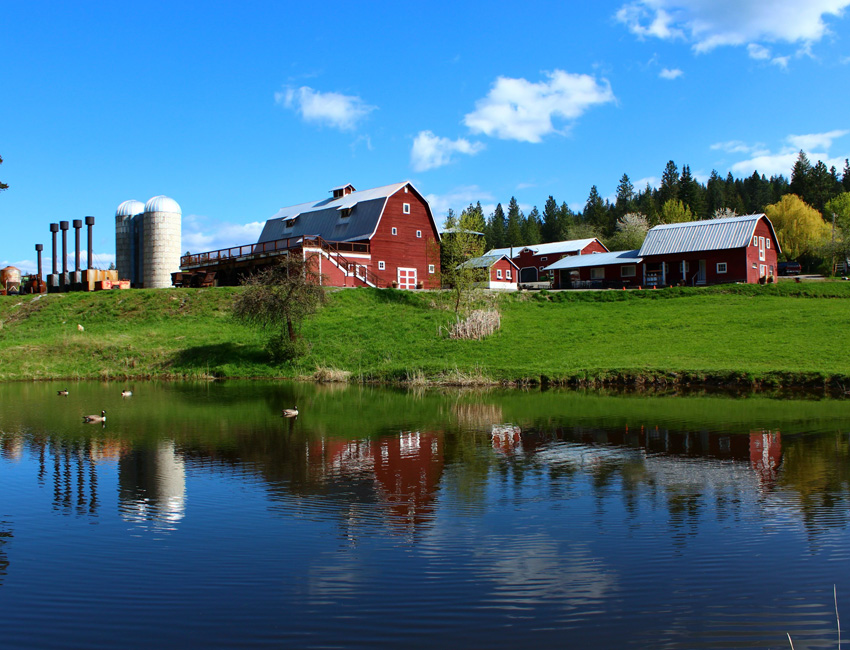 Years later, life circled back in a way that almost doesn’t happen. An opportunity emerged to return to Coeur d’Alene and reclaim part of the original farm. What stood there wasn’t impressive—it was worn down, weathered, and showing its age. But beneath all of that was something undeniable: presence, history, and a kind of gravity that cannot be manufactured. Instead of replacing it, it was restored, slowly and intentionally, piece by piece.
It Didn’t Start as a Plan
At first, there was no grand plan. Just a thought that maybe people would come out and see it. And they did. But what happened next was unexpected. People didn’t just visit—they reacted. They called friends, brought others back, stayed longer than they intended. They felt something they couldn’t quite explain. That place became Settlers Creek.
Built Over Time, Not Designed All at Once
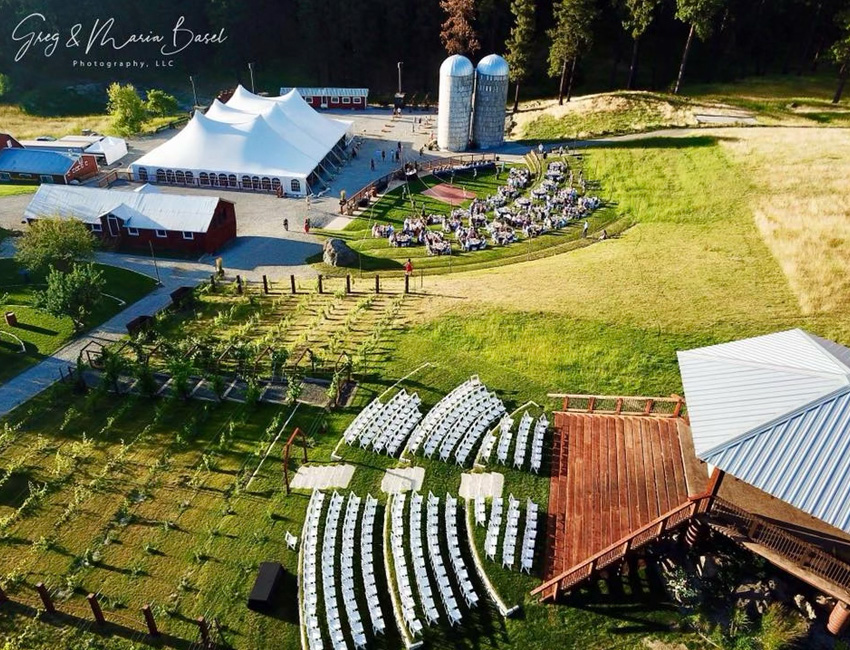
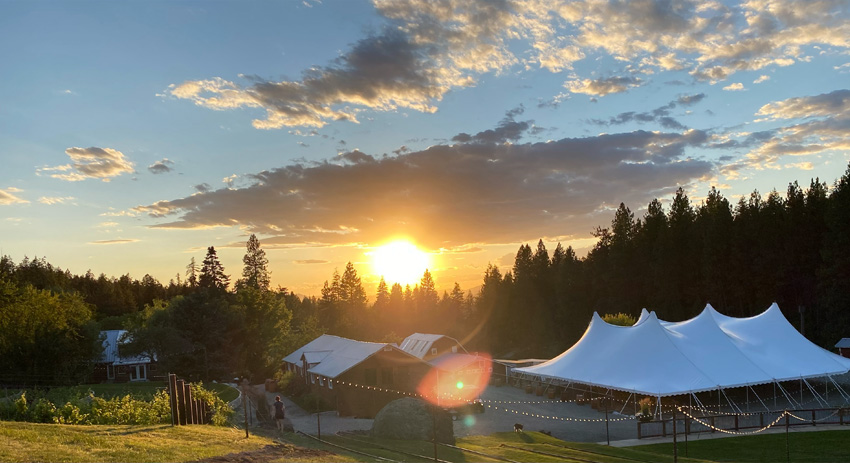
When it formally opened in 2008, what had taken shape wasn’t something designed in the traditional sense. It had evolved. A barn became a gathering space, opening onto a massive second-story deck that pushed the experience out into the landscape. A heavy timber hilltop gazebo rose at the highest point, anchoring the property against the horizon. An amphitheater formed naturally out of a bowl-shaped pasture nearby, as if the land itself had always intended it. None of it was built for efficiency. It was built for experience—for movement, for gathering, for people to exist together in a place that felt real.
When Scale Entered the Picture & Our First Big Find
It was during those early years, as Settlers Creek was coming to life, that something else happened—something that would quietly reshape everything that followed. One spring day, driving the long way home through farm country with a trailer in tow, Chris spotted something unusual sitting just outside a barn: a black and rust-colored mass that looked like a furnace. Curiosity took over. He pulled over, crossed the road, and opened its heavy doors.
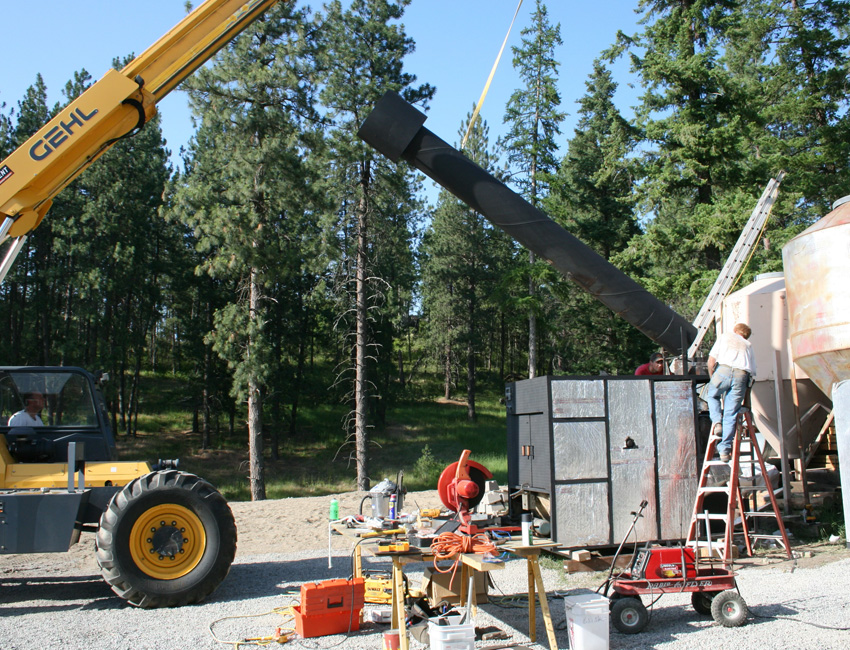
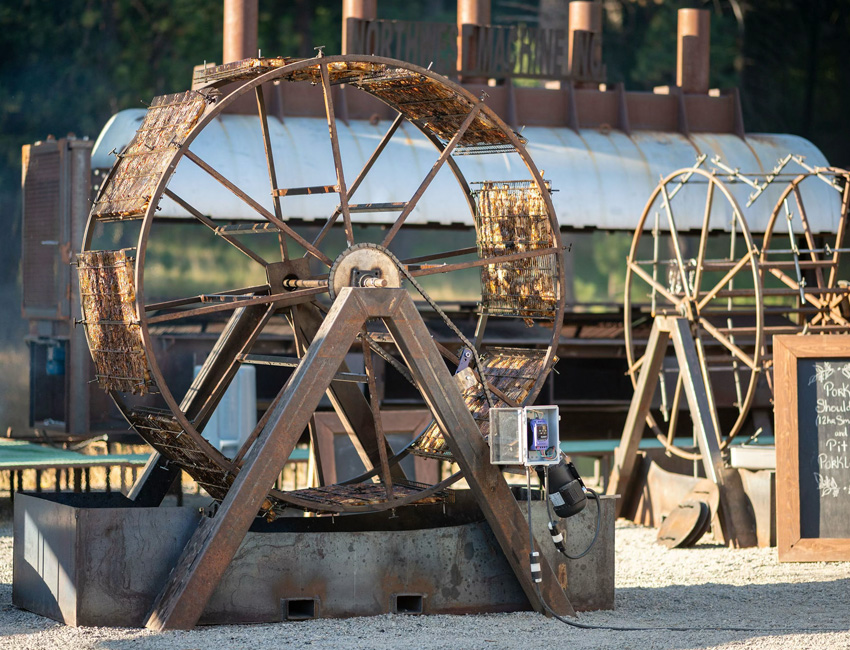
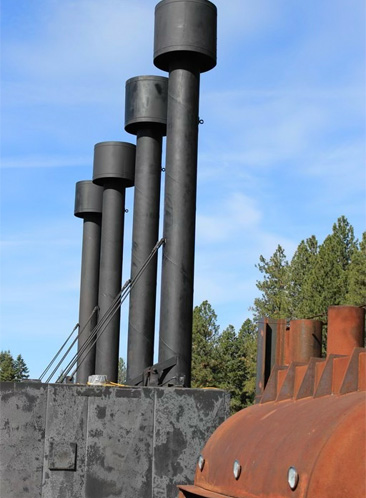 Inside was something he had never seen before—a Ferris wheel-style wood-fired smoker, massive and industrial, unlike anything he had encountered. In that moment, something shifted. It introduced the idea of scale.He knocked on the nearby house and spoke with the owner, an older woman who explained that the machine had belonged to her husband, who had passed away just months earlier. He had been passionate about barbecue and antique machinery. Chris tried to buy it on the spot. She declined—it was too soon. So he came back, every six months or so, until eventually she agreed. When the time came, it took a crane to move the behemoth home.
What followed was something very familiar—just on an entirely different scale.
Same Lessons, Bigger Stakes
The first cook ended almost exactly as you’d expect: ten chickens turned completely black, not from burning, but from soot. And once again, the lesson began. Fire velocity. Fire stage. Distance. Timing. It was the same process he had struggled with decades earlier, now playing out on an industrial scale.
Over Time, It Became Something More
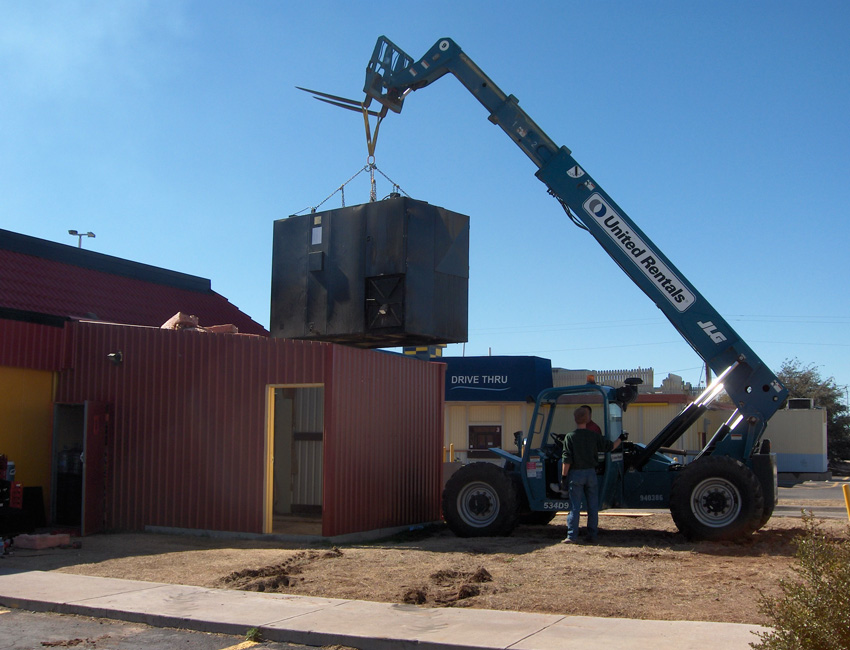 That moment marked the beginning of something much bigger. Within a few years, more machines followed—trips across the country, flying into small towns in Texas and Oklahoma, pulling massive cookers out of restaurants and yards, rebuilding them, repurposing them. Each one expanded the idea. And somewhere long the way, something deeper took hold.
Fire was no longer just something he worked with. It became a way of seeing.
It Changed How He Saw Everything
Industrial machines, scrap yards, forgotten equipment—none of it looked the same anymore. A rusted structure became a grill. A massive frame became a pit. A mechanical system became motion around flame.
Even a 20- or 40-foot combine head didn’t look like farming equipment anymore—it looked like a chicken rotisserie. Not metaphorically. Literally. It became something that couldn’t be unseen. Everything became potential fire—for purposes that don’t exactly lend themselves to a mugshot. It sounds a little crazy. But it’s real.
For a While it Lived in the Background
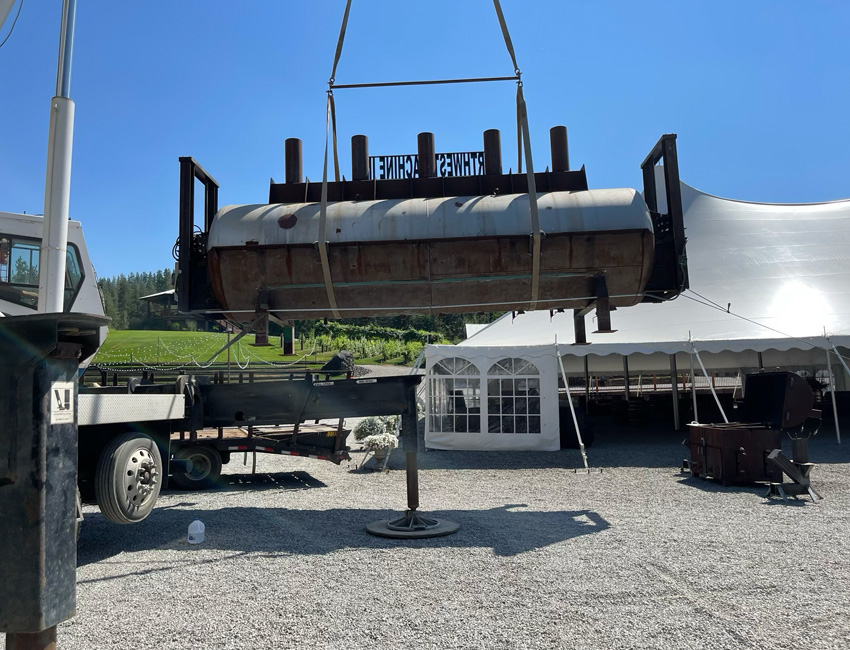
For years, this lived quietly alongside the venue business—private events, weddings, corporate gatherings, a fully built commercial kitchen. The fire was there, but it wasn’t yet the center.
Then Fire Took Something Back
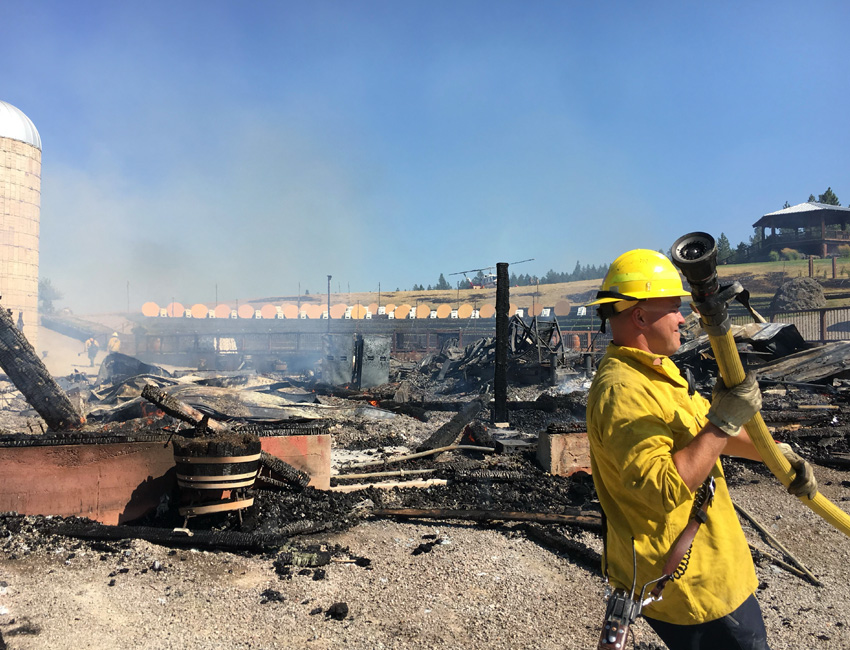
Then, in 2017, fire returned again—but this time, it took something. The main barn, over a century old, burned to the ground. It was a loss that cut deep. But fire has never been just one thing. It destroys, but it also clears and reveals.
That’s When It Became Clear – Bring Fire Back to the Center
And in that moment, something became unmistakably clear: this had never really been about buildings. It had always been about fire.
What followed wasn’t the creation of a new idea, but the uncovering of one that had been there all along.
Discovery Fire.
Not as an event, but as a return.
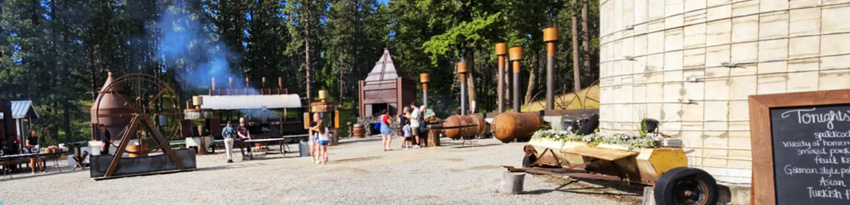
Today, what exists is the result of everything that came before. Massive, custom-built live-fire systems—fabricated from repurposed industrial equipment—spread across the land. Ferris wheel grills, tilt pits weighing tens of thousands of pounds, oversized southern pits, mechanical systems that turn cooking into motion. They are not just tools; they are expressions. They create something people don’t expect—something closer to awe—because the cooking is no longer hidden. It becomes part of the experience.
People don’t just eat. They move through the space, they watch, they gather, they connect—exactly as we always have.
Back to Something Foundational
Before restaurants, before kitchens, before modern life separated us from process, there was fire. And around it formed everything that still matters: food, story, connection, community. What is happening here is not the creation of something new, but a return to something original—this time not out of fear for survival, but with a kind of intentional, passionate energy to remember it.
Still Evolving – Never Really Left It
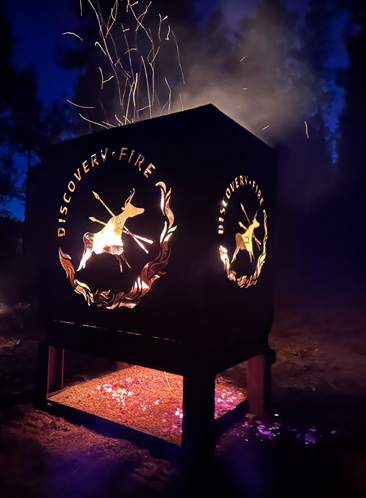 Settlers Creek is the ground. Discovery Fire is the expression. Together, they form something that is still evolving—not a finished idea, but a living one.
And underneath it all is a simple truth: what started as a boy building fires that no one quite understood never really stopped.
Before anything else, there was fire.
We’re just bringing people back to it.